

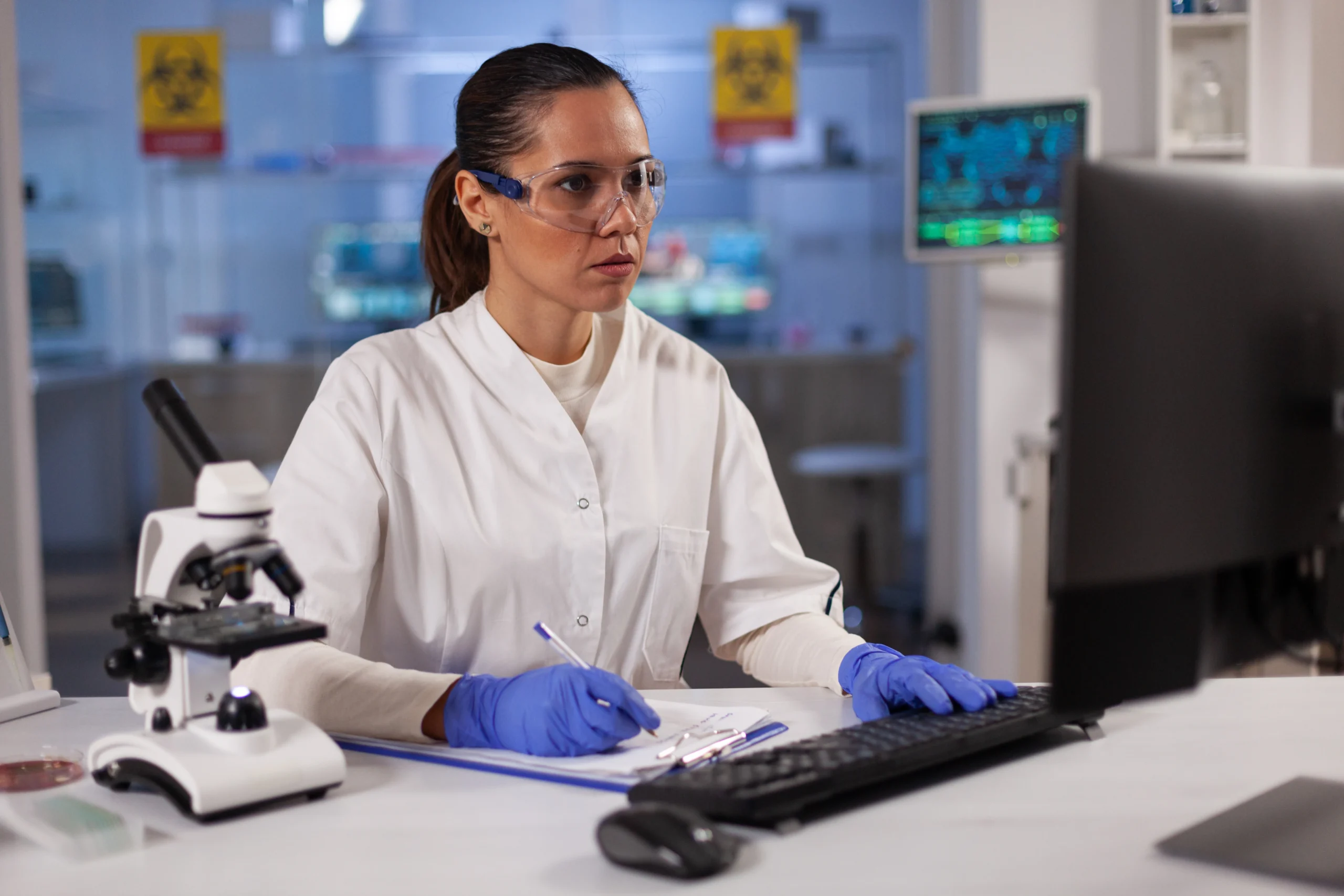
A laboratory information management system– LIMS is no longer an upgrade which is discussed at budget meetings and then shelved. It has become a glue which now holds a modern lab together. The main question has shifted from ‘do we need this?’ to ‘why haven’t we done it yet?’
A few years ago, labs were being handled by physical logbooks, Excel files, etc. Someone always knew where sample #2089 was. Someone always knew what test reports were due. This system was not efficient, but it worked.
This era is ending quietly, and 2026 looks like an inflection point.
With the rising lab volumes, simple management of lab operations is getting difficult. Various structural forces, such as biotech, pharma, CROs, environmental labs, and food testing, are all colliding at the same time. Strict NABL ISO 17025 accreditations and pressure from international clients for up-to-date software at the labs are making a laboratory information management system a requirement and not just a casual upgrade.
Let’s take a look at what shifts are making LIMS a non-negotiable.
Shift 1: Revised Schedule M Has Changed What ‘Compliant’ Actually Means
As per India’s revised schedule M, all data needs to be ALCOA+ compliant- Attributable, Legible, Contemporaneous, Original, Accurate, Complete, Consistent, Enduring, and Available. Validation of the equipment lifecycle is mandatory, and the senior management is personally responsible for the quality system.
But here’s the truth: ALCOA+ compliant data can’t be produced on a paper-based or Excel-driven system. The moment an inspection officer requests an unedited, timestamped original record, and you submit a handwritten record or an Excel sheet, you have a problem. This is where LIMS software in pharma can help. Lab management software automatically creates audit trails, and every entry, sign-off, or modification includes a user ID and a timestamp. Therefore, LIMS in pharma is an infrastructure which makes compliance sustainable and not stressful.
Shift 2: NABL Accreditation Is Getting More Competitive and More Valuable
NABL accreditation is not just a quality signal but a revenue driver. Now that NABL has increased its accreditation validity to four years with annual surveillance, there is more pressure on the labs which are running on informal processes. This NABL certification rewards labs which offer services with great quality.
But maintaining the accreditation is a challenge, as it is difficult to keep a record of data manually. On the other hand, a laboratory information management system can generate reports on demand. As the audit trail is there, all the actions are logged, and calibration records are also updated. Lab management software is the difference between a lab that is always ready for NABL and a lab that is preparing for NABL.
Shift 3: CRO Growth Is Creating Multi-Site Management Nightmares
India is growing globally in the field of contract research owing to its scientific talent, cost-effectiveness, and proximity to API manufacturing. But growth also attracts a little complexity. A CRO that once operated with 15 scientists at one site cannot use the same workflows when it has a staff of 200 and three sites.
When a sponsor decides to audit one site, they assume that they will find the same data discipline that they find at your other sites. This is impossible to achieve without a centralised system. This is where a laboratory information management system in India will help. With the help of a laboratory information management system (LIMS), multi-site CROs can access all the information from one dashboard, be it samples, tests, results, or instruments. A LIMS software in pharma is a commercial differentiator for a CRO that is trying to win and retain international contracts.
Shift 4: IoT-Connected Equipment Is Generating Data, No One Has A System To Catch the Data
Across India, modern laboratories have smart lab equipment. For instance, HPLC systems with automated run summaries, incubators with real-time temperature logging, environmental chambers with humidity alerts, etc. Thus, IoT-based asset tracking is now a part of how modern lab infrastructure is being designed in today’s time.
But the irony is that most labs have smart equipment and are still manually copying the readings into spreadsheets. The data gets generated digitally and is degraded into a format that is difficult to analyse or audit. With the help of a laboratory information management system (LIMS), the data gets captured at the source. The calibration records are being auto-populated. Out-of-range environment readings trigger real-time alerts and not end-of-day manual checks. Therefore, the lab’s information infrastructure and physical infrastructure now work together.
Shift 5: International Clients Now Audit Your Data Systems, Not Just Your Results
If your lab works with, or plans to work with, American or European pharmaceutical clients, you must know that audit culture has changed. These days, sponsors not only want to see the results but also how those results were generated, reviewed, and protected from manipulation. An audit in which data is placed in uncontrolled Excel files, results are emailed as attachments, and analyst notes are present in personal notebooks is not a good audit. These findings make receiving a qualification harder and show up in warning letters.
A LIMS software in pharma can help labs, as it creates the required data governance infrastructure that international clients are looking for. It can help with electronic signatures, audit trails, and controlled access. This is a huge part of why LIMS in pharma has become a basic requirement and not just a differentiator for labs that are working with international clients.
Shift 6: Reagent Costs And Waste Are Now Under The Microscope
Over the last few years, many Indian labs were left scrambling when a lot of critical reagents ran out unexpectedly as a result of global supply chain disruption. To avoid this problem, labs began to overstock reagents. Now, due to this, a new problem has arisen: reagents expiring on shelves, repurchasing consumables as nobody was aware what consumables were present in the stockroom, and an increased budget.
Manual inventory management fails in several predictable ways. It does not flag the expiring items in time. It doesn’t alert you when stock is falling below the reorder levels. What a lab requires is a proper lab inventory management system which ties consumption to test execution directly.
A laboratory inventory management software will track reagent lots, consumption patterns, expiry dates, and reorder thresholds automatically. In fact, some modern systems now offer predictive reorder recommendations based on the upcoming scheduled tests.
Shift 7: Sample Volumes are Rising Faster Than Lab Headcount
India’s diagnostic labs are processing dramatically higher sample volumes driven by growing disease burden, expanded health insurance penetration, and population health programs. Research labs are handling larger compound libraries. Pharma QC labs are managing more SKUs and shorter batch cycles. Across the board, throughput expectations have increased, but hiring has not kept pace.
Under these conditions, manual sample tracking can become a recipe for errors. Samples can get mislabelled, turnaround time commitments can get missed, and retests are not getting flagged properly. A laboratory information management system (LIMS) can help with automation and sample management for lab. It tracks every step without manual logging. This kind of lab management software is what separates a team that consistently hits turnaround time targets from those who miss them. The staff can also spend more time on actual analysis, as now the administrative tasks are taken care of.
Shift 8: India Is Positioning Itself as A Global Lab Services Hub, and That Requires Global Standards
20% of the global generic medicines by volume are being supplied by India. The country is increasingly competitive in vaccines, biosimilars, and complex generics. The life sciences sector is actively being pushed by the government as a strategic priority. But the global sectors tend to operate under global standards. These international clients audit global standards, and they often walk away from suppliers who don’t demonstrate them.
A lab without a laboratory information management system (LIMS) in 2026 isn’t just operationally behind. It’s strategically constrained. It can serve domestic clients. It can work on domestic regulatory approvals. But the ceiling is lower, and the path to international markets is harder than it needs to be.
The laboratory information management system in India is helping these labs get international clients. A lab without a LIMS in 2026 can serve domestic clients and work on domestic regulatory approvals. But their ceiling is lower, and the path to the international market is harder.
Conclusion
If you are looking to future-proof your laboratory and navigate India’s fast-evolving regulatory and operational landscape with confidence, eLABSS stands out as the best laboratory information management system for food, water, cosmetic, CRO, pharma, and research & testing labs. With compliance-ready infrastructure built around Revised Schedule M, NABL ISO 17025, and FDA 21 CFR Part 11, advanced sample management for lab, an integrated lab inventory management system, IoT-ready instrument connectivity, and flexible cloud or on-premise deployment, it delivers an end-to-end solution designed specifically for the realities of today’s Indian laboratory.
Investing in the right laboratory information management system is not just a technological upgrade. Given the eight shifts reshaping India’s lab ecosystem right now, it is a strategic necessity for quality, compliance, and long-term growth.
Frequently Asked Questions
1. What is a Laboratory Information Management System?
A Laboratory Information Management System (LIMS) is a software platform that helps laboratories manage samples, workflows, test data, inventory, and reports in a centralised digital system.
2. Why are Indian laboratories adopting LIMS in 2026?
Indian labs are adopting LIMS due to rising sample volumes, stricter regulatory requirements such as NABL ISO 17025 and Revised Schedule M, and the need for better data management and automation.
3. Can LIMS improve laboratory efficiency?
Yes. A laboratory information management system helps in automating report generation, inventory management, sample tracking, and data recording, which allows lab staff to focus more on analysis and less on manual administrative tasks.
4. How does LIMS help manage laboratory inventory and reagents?
Laboratory inventory management software can track reagent lots, monitor expiry dates, manage consumption patterns, and send alerts when stock levels fall below reorder thresholds.
5. Is LIMS necessary for NABL-accredited laboratories?
While not legally mandated by name, NABL accreditation under ISO/IEC 17025 requires documented audit trails, calibration records, and corrective action logs, all of which are extremely difficult to maintain consistently without a LIMS. For any lab serious about retaining accreditation without last-minute scrambles, it is effectively necessary.
6. What industries use a Laboratory Information Management System?
LIMS is used across pharmaceuticals, clinical diagnostics, food and beverage testing, environmental monitoring, petrochemicals, forensics, agriculture, and medical devices. In India, the biggest adopters are pharma manufacturers, CROs, NABL-accredited testing labs, and hospital diagnostic chains.