

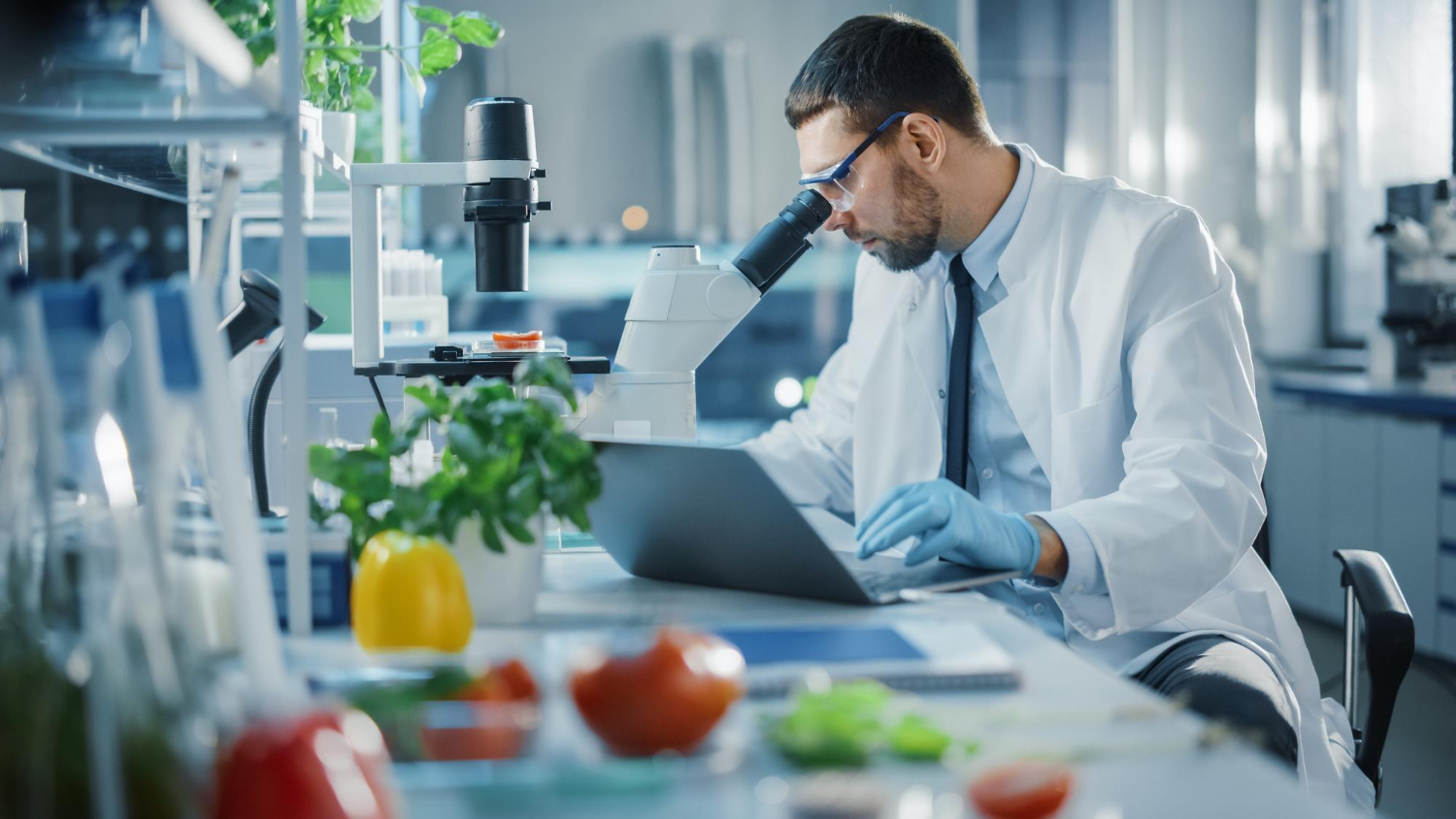
Food testing laboratories handle a constant flow of samples from manufacturers, exporters, food processors, retailers, regulatory bodies, and other organisations. As sample volumes increase, managing sample registration, testing, documentation, approvals, reporting, and customer communication through spreadsheets or manual records can become difficult. This is where LIMS for Food Testing Laboratories can make a significant difference.
A Laboratory Information Management System, commonly known as LIMS, provides a structured digital platform for managing laboratory workflows from sample receipt to final reporting. With the right LIMS software, food laboratories can improve sample traceability, reduce manual data entry, organise workloads, strengthen audit trails, and make laboratory operations more efficient.
For laboratories dealing with hundreds or thousands of samples, the value of a well-designed Food Testing LIMS Software goes beyond simply replacing paper records. It can connect multiple stages of the testing process and provide laboratory teams with a central source of information.
Why Managing High Sample Volumes Is a Challenge
A growing food testing laboratory often faces a simple problem: more samples mean more information to manage.
Every sample may have associated details such as:
Customer information
Sample identification
Sample collection date
Receipt date and time
Test requirements
Assigned analysts
Testing status
Analytical results
Quality checks
Approval status
Reports and certificates
Customer communication
When these activities are managed manually, the risk of delays and inconsistencies can increase.
For example, a laboratory receiving 500 samples in a month may be able to manage records through spreadsheets. But when the volume grows to several thousand samples, maintaining accurate records across multiple spreadsheets, registers and email threads becomes increasingly challenging.
This is one reason modern laboratories are adopting a laboratory information management system to centralise information and automate repetitive processes.
What Is a LIMS System?
A LIMS System is a digital platform designed to manage laboratory data, workflows and operations.
In a food testing environment, the system can support the journey of a sample from registration and testing through review and reporting.
A typical workflow may look like:
Sample Receipt → Sample Registration → Test Assignment → Analysis → Result Entry → Review → Approval → Report Generation → Customer Delivery
Instead of managing each stage separately, a LIMS can connect these activities within one digital workflow.
This creates better visibility into the status of individual samples and helps laboratory managers understand what work is pending, what has been completed, and where bottlenecks may exist.
LIMS for Food Safety and Regulatory Compliance
Food laboratories play an important role in protecting consumers and supporting food businesses.
Testing may be performed to assess parameters such as microbiological safety, contaminants, pesticide residues, nutritional composition, additives, allergens or other food quality characteristics.
LIMS for Food Safety can help laboratories organise the information associated with these testing activities.
A digital system can also support consistent workflows and documentation.
However, it is important to understand that LIMS itself does not guarantee regulatory compliance. Compliance depends on the laboratory’s complete quality-management system, validated procedures, competent personnel, appropriate equipment and applicable regulatory requirements.
The LIMS serves as a technology platform that can help laboratories implement and document those processes more effectively.
How LIMS for Food Testing Laboratories Handles High Sample Volumes
1. Centralised Sample Registration
One of the first challenges in a busy laboratory is registering incoming samples accurately.
A LIMS for Food Testing Laboratories can provide a centralised system for registering and identifying samples. Important sample information can be captured digitally and linked to a unique sample record.
This reduces dependence on multiple paper registers and disconnected spreadsheets.
Once a sample is registered, authorised employees can access the relevant information according to their assigned permissions.
For laboratories handling high sample volumes, centralised registration can make it easier to locate sample information quickly.
2. QR Code-Based Sample Identification
Sample identification becomes particularly important when laboratories are processing hundreds of samples simultaneously.
eLABSS includes QR Code Generation, allowing laboratories to create digital identifiers for samples.
A QR code can help laboratory personnel quickly access the corresponding sample record and reduce the need for manually searching through long lists of sample numbers.
For example, when an analyst receives a batch of food samples for testing, the QR code can provide a convenient way to identify the relevant record and access the associated testing information.
This can improve traceability and reduce manual handling.
3. Better Test Assignment and Workflow Management
High sample volumes require effective allocation of work.
A laboratory may have multiple analysts working on different parameters, instruments, or testing methods. Without a central workflow, it can become difficult for managers to determine who is responsible for a particular test.
Food Laboratory Management Software can help organise these workflows.
Depending on the configuration, laboratory managers can assign tests or tasks to appropriate personnel and monitor their status.
This can help answer operational questions such as:
Which samples are waiting for analysis?
Which tests have been assigned?
Which results are pending?
Which samples are ready for review?
Which reports are awaiting approval?
Having this information in one system can improve operational visibility.
4. Reducing Manual Data Entry
Manual data entry consumes valuable laboratory time.
Analysts and administrative staff may otherwise have to enter the same information into multiple registers, spreadsheets or documents.
A properly configured LIMS Software for Food Labs can reduce repetitive data entry by allowing information to flow through connected stages of the laboratory workflow.
For example, customer and sample information entered during registration can be associated with the testing workflow and later used during report generation.
Reducing duplicate entry can also help minimise the risk of transcription errors.
However, automation should not replace appropriate review and quality-control procedures. Laboratory personnel should continue to verify results according to the laboratory’s established procedures.
5. Faster Result Management
Food testing can involve a wide range of parameters, including microbiological, chemical, physical and nutritional testing.
Managing these results becomes increasingly complex as sample volumes increase.
A Food Testing LIMS Software platform can provide a structured environment for recording and managing analytical results.
Laboratory teams can see which results have been entered, which are pending, and which require review.
This can help reduce the risk of results being overlooked in large datasets.
6. Improving Sample Traceability
Traceability is one of the most important advantages of a digital laboratory system.
A good LIMS System can create a history of the sample and its associated activities.
Depending on the configuration, this may include:
Who registered the sample
When it was received
Which tests were assigned
Who performed the analysis
When results were entered
Who reviewed the results
When the report was approved
When the report was issued
This level of traceability is particularly valuable for laboratories operating under quality-management and accreditation requirements.
7. Role-Based Access Improves Data Security
When many people work within the same laboratory, not everyone should have access to every function.
eLABSS provides role and permission-based access, allowing access rights to be structured according to user responsibilities.
For example, different permissions can be provided to:
Laboratory analysts
Supervisors
Quality personnel
Laboratory managers
Administrators
Report approvers
This approach helps ensure that users have access to the functions and information required for their responsibilities.
It can also support stronger control over sensitive laboratory information.
8. Complete Audit Trail
An important requirement in a quality-focused laboratory is knowing what happened to a record and when.
eLABSS includes a complete audit trail, which can help maintain a history of activities and changes within the system.
For laboratories processing large volumes of samples, an audit trail provides additional visibility into data management.
It can help laboratory management investigate questions such as:
When was a result entered?
Was information modified?
Who made the change?
When was the report approved?
A clear audit history can be valuable during internal reviews, customer assessments and quality audits.
9. Cloud-Based LIMS Makes Information Accessible
Traditional laboratory systems may require information to be accessed from specific computers or locations.
A cloud-based approach can provide greater flexibility.
eLABSS offers a cloud-based solution, allowing authorised users to access the system through supported devices and environments.
For laboratories with multiple locations or management teams that need operational visibility, cloud access can make it easier to monitor laboratory activities without depending entirely on a single physical workstation.
Of course, laboratories should also evaluate security, user access controls, backup practices and data-management policies when selecting a cloud-based system.
10. Scheduled MIS and Management Reporting
Laboratory managers need more than individual sample records. They also need a broader view of laboratory performance.
eLABSS includes Scheduled MIS, which can support recurring management information and reporting requirements.
Management reports can help organisations monitor areas such as:
Sample volumes
Testing status
Pending work
Completed work
Turnaround performance
Laboratory workload
Operational trends
When sample volumes increase, these insights can help management identify bottlenecks and allocate resources more effectively.
11. Supporting NABL 133 and ISO Requirements
Food testing laboratories often operate within structured quality-management frameworks.
eLABSS is designed with compliance considerations including NABL 133 and ISO 9001.
The platform also includes supporting documentation such as a User Manual and Validation Report.
Technology alone does not make a laboratory compliant. However, a LIMS that supports controlled workflows, permissions, traceability and documentation can contribute to a laboratory’s overall quality system.
Laboratories should always assess the applicable accreditation and regulatory requirements against the actual features and validated scope of their selected software.
LIMS Software vs Traditional Spreadsheet-Based Management
Spreadsheets can be useful for simple laboratory operations, but they become harder to manage as sample volumes and workflow complexity increase.
| Traditional Manual/Spreadsheet Approach | LIMS-Based Approach |
|---|---|
| Information may be spread across files | Centralised sample records |
| Manual sample tracking | Digital workflow tracking |
| Repetitive data entry | Reduced duplicate entry |
| Manual report preparation | Structured report workflows |
| Limited visibility | Real-time workflow visibility |
| Difficult to track changes | Audit trail |
| Manual sample identification | QR code-based identification |
| Separate management reports | Scheduled MIS capabilities |
The objective is not necessarily to eliminate spreadsheets completely. Instead, laboratories can use an appropriate lab management software platform to establish a more controlled central workflow.
How to Choose LIMS Software for a Food Testing Laboratory
Choosing the right LIMS requires more than comparing features.
A laboratory should first identify its current workflow and future requirements.
Sample Volume
How many samples does the laboratory process today, and how many does it expect to process in the future?
Testing Complexity
Does the laboratory conduct microbiology, chemistry, pesticide residue, nutritional, physical or other specialised testing?
User Roles
How many analysts, supervisors, quality personnel and administrators will use the system?
Reporting Requirements
Does the laboratory need automated or scheduled reports, certificates and customer-facing documentation?
Compliance Requirements
Does the system support the laboratory’s applicable quality and accreditation processes?
Scalability
Can the system grow as the laboratory adds new tests, users, locations or customers?
Ease of Use
A technically advanced system is of limited value if laboratory staff find it difficult to use. A user-friendly interface can support adoption across different teams.
The Future of Food Laboratory Management
Food testing laboratories are handling increasingly complex workflows and larger volumes of information.
Digitalisation is therefore becoming an important part of laboratory operations.
Modern Food Laboratory Management Software can help laboratories move from fragmented manual processes toward connected digital workflows.
The future of laboratory management is likely to involve greater automation, improved traceability, cloud-based accessibility, digital reporting and data-driven decision-making.
However, technology should always support—not replace—the expertise of laboratory professionals.
The most effective approach combines capable scientists and technicians with reliable processes and appropriate digital tools.
Conclusion
Managing high sample volumes requires more than simply adding more spreadsheets, registers or administrative staff. As a food testing laboratory grows, a structured digital system can help connect sample management, testing, results, approvals and reporting within a single workflow.
LIMS for Food Testing Laboratories can support this transition by improving traceability, reducing repetitive data entry, strengthening audit trails and giving laboratory teams better visibility into daily operations.
For laboratories looking for Food Testing LIMS Software or LIMS Software for Food Labs, eLABSS provides a range of features designed around modern laboratory workflows, including role- and permission-based access, cloud-based deployment, a user-friendly interface, QR code generation, scheduled MIS and a complete audit trail.
eLABSS also incorporates compliance-oriented features supporting NABL 133 and ISO 9001, along with a user manual and validation report.
For food testing laboratories that are experiencing growing sample volumes and want to move toward more organised, traceable and digitally managed operations, eLABSS can be considered as a LIMS solution for building a more efficient laboratory workflow.
Frequently Asked Questions
1. What is LIMS software used for in a food testing laboratory?
LIMS software is used to manage laboratory workflows, including sample registration, test assignment, result management, approvals, reporting and traceability. In a food testing environment, it can help laboratories manage large numbers of samples more systematically.
2. How does LIMS help laboratories manage high sample volumes?
A LIMS can centralise sample information, automate or streamline workflows, provide digital sample identification, reduce repetitive data entry and give managers visibility into pending and completed work. These capabilities can help laboratories manage increasing sample volumes more efficiently.
3. What is the difference between LIMS and lab management software?
The terms are often used broadly and can overlap. A laboratory information management system generally focuses on managing samples, testing data, workflows and laboratory records. Lab management software may include these functions along with broader operational and administrative capabilities. The actual features depend on the software provider.
4. Is LIMS important for food safety testing?
Yes, a properly implemented LIMS can support LIMS for Food Safety workflows by helping laboratories organise samples, test results, approvals, documentation and traceability. However, LIMS is one part of a laboratory’s overall quality and food safety management system.
5. What features should food testing laboratories look for in LIMS?
Important features can include role-based permissions, sample tracking, QR code identification, workflow management, result entry, reporting, audit trails, cloud accessibility, management information reports and support for applicable quality requirements. Laboratories should select features based on their actual workflow and compliance needs.
Comments are closed