

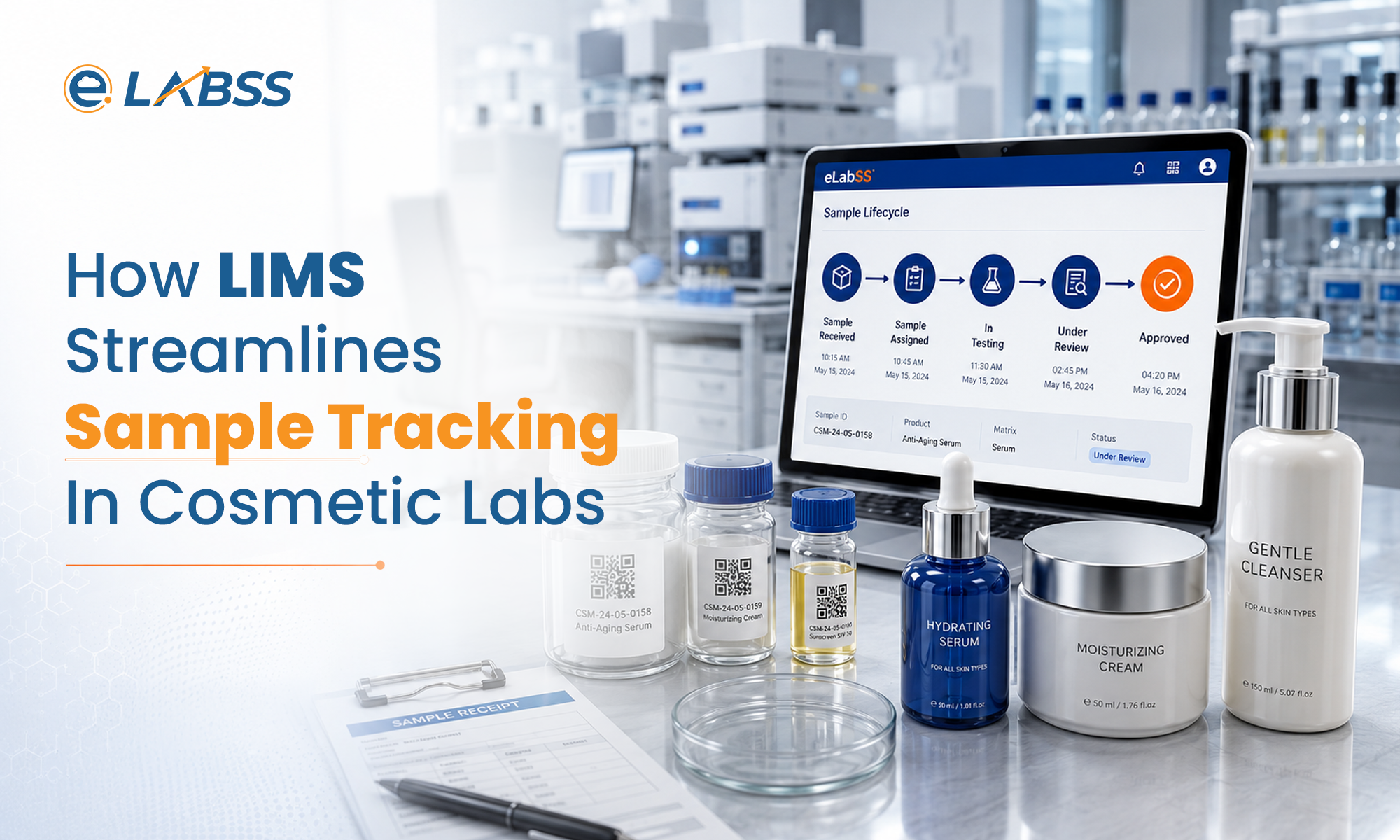
In today’s highly regulated cosmetics industry, accurate sample tracking is critical for ensuring product safety, quality, and compliance. A modern LIMS software solution helps cosmetics testing laboratories manage samples efficiently, eliminate manual errors, and maintain complete traceability throughout the testing lifecycle. Whether a laboratory is conducting stability testing, microbiological analysis, preservative efficacy testing, or cosmetic quality control assessments, implementing a robust Laboratory Information Management System (LIMS) can significantly improve operational efficiency and data integrity.
As cosmetic products become more complex and regulatory expectations continue to evolve, laboratories need advanced tools to manage increasing sample volumes. This is where LIMS software plays a crucial role. It streamlines sample management, improves visibility, enhances compliance management, and ensures accurate reporting. In this article, we’ll explore eight key ways a LIMS software solution transforms sample tracking in a modern cosmetic testing laboratory.
Why Sample Tracking Matters in Cosmetics Testing Laboratories
Every cosmetic product undergoes multiple testing procedures before reaching consumers. These may include:
- Stability testing
- Microbiological testing
- Preservative efficacy testing
- Heavy metal analysis
- Safety assessments
- Quality control testing
Each test involves multiple samples, analysts, instruments, and reports. Without proper tracking systems, laboratories may face:
- Sample mix-ups
- Data entry errors
- Delayed testing
- Compliance issues
- Lost samples
- Inaccurate reports
A comprehensive Cosmetics LIMS helps laboratories overcome these challenges by providing end-to-end sample visibility and automation.
1. LIMS Software Enables Complete Sample Traceability
One of the biggest advantages of implementing LIMS software is complete sample traceability.
From the moment a sample enters the laboratory until final report generation, every activity is recorded automatically. Laboratories can track:
- Sample receipt
- Sample preparation
- Testing stages
- Analyst assignments
- Instrument usage
- Results review
- Report approval
This level of sample traceability ensures that every sample’s journey can be reconstructed instantly during audits or investigations.
Real-World Example
Imagine a cosmetic manufacturer receives a customer complaint about a face cream. Using a Laboratory Information Management System, the laboratory can quickly retrieve historical testing records, identify the exact batch tested, and verify quality control results within minutes.
Without digital tracking, locating such information could take hours or even days.
2. LIMS Software Reduces Human Errors in Sample Management
Manual sample tracking using spreadsheets, paper logs, or disconnected databases increases the likelihood of human errors.
Common mistakes include:
- Incorrect sample labeling
- Duplicate entries
- Lost paperwork
- Data transcription errors
- Misplaced samples
A modern LIMS software automates sample registration and data capture, reducing reliance on manual processes.
How Automation Helps
The system automatically:
- Assigns unique sample IDs
- Generates barcode labels
- Records sample metadata
- Tracks status updates
- Maintains audit trails
This level of laboratory automation minimizes mistakes and improves overall data accuracy.
3. Cosmetics LIMS Improves Barcode-Based Sample Tracking
Barcode technology has become a standard feature in advanced cosmetics testing software.
When samples arrive at the laboratory, the LIMS software generates unique barcode labels. Laboratory staff can scan these labels throughout the testing process.
Benefits include:
- Faster sample identification
- Reduced manual data entry
- Improved accuracy
- Real-time sample location tracking
- Enhanced workflow efficiency
Example Workflow
A cosmetics testing laboratory receives 500 stability testing samples.
Without barcode-enabled tracking:
- Staff manually enter sample information.
- Sample handling takes significant time.
- Errors increase as sample volumes grow.
With Cosmetics LIMS, barcode scanning automatically updates sample status and location, reducing processing time dramatically.
4. LIMS Software Provides Real-Time Sample Visibility
Laboratory managers often struggle to answer simple questions:
- Where is the sample now?
- Which analyst is handling it?
- Has testing started?
- Are results ready?
A centralized Laboratory Information Management System provides real-time visibility into every sample.
Dashboards allow users to monitor:
- Sample status
- Test progress
- Turnaround times
- Workload distribution
- Pending approvals
This transparency helps laboratories improve productivity and customer service.
Business Impact
Real-time visibility enables laboratories to:
- Reduce turnaround times
- Improve resource allocation
- Enhance customer communication
- Increase operational efficiency
For high-volume cosmetic testing facilities, this visibility is invaluable.
5. LIMS Software Streamlines Laboratory Workflow Management
Managing laboratory workflows manually can be complicated, especially when dealing with multiple cosmetic product categories.
Different products require different testing protocols, including:
- Skincare products
- Haircare products
- Makeup products
- Fragrances
- Personal care products
A robust LIMS software automates laboratory workflow management by assigning tasks, tracking progress, and ensuring procedures are followed consistently.
Workflow Automation Features
The system can:
- Automatically assign tests
- Notify analysts of pending tasks
- Trigger review workflows
- Schedule instrument usage
- Generate alerts for overdue samples
This level of laboratory automation reduces administrative burden and improves operational consistency.
6. LIMS Software Strengthens Compliance Management
Compliance is a top priority for every cosmetic testing laboratory.
Laboratories must comply with various regulations and quality standards, including:
- ISO 17025
- Good Laboratory Practices (GLP)
- FDA guidelines
- EU Cosmetic Regulations
- GMP requirements
A well-designed LIMS software supports compliance management by maintaining complete documentation and audit trails.
Key Compliance Features
- Electronic signatures
- Audit trails
- Controlled user access
- Automated record retention
- Version control
- Data integrity controls
These capabilities help laboratories demonstrate compliance during inspections and audits.
Audit Readiness
Instead of searching through paper records, laboratories can instantly retrieve sample histories, test results, and approval records from a centralized platform.
This significantly reduces audit preparation time.
7. LIMS Software Enhances Data Integrity and Reporting
Accurate laboratory data is essential for product safety and quality assurance.
When laboratories rely on manual systems, data can become fragmented across spreadsheets, notebooks, and disconnected applications.
A centralized Laboratory Information Management System ensures all sample-related data is stored securely in one location.
Benefits Include
- Consistent data recording
- Improved result accuracy
- Automatic calculations
- Secure data storage
- Faster report generation
This improves confidence in testing outcomes and supports better decision-making.
Cosmetic Quality Control Benefits
For cosmetic quality control, reliable data helps manufacturers:
- Release products faster
- Reduce quality risks
- Improve customer satisfaction
- Maintain regulatory compliance
As cosmetic brands face increasing scrutiny from consumers and regulators, data integrity becomes a competitive advantage.
8. LIMS Software Supports Scalability and Future Growth
As cosmetic companies launch new products and expand globally, testing laboratories must handle larger sample volumes.
Manual systems often struggle to scale effectively.
A modern LIMS software provides the flexibility needed to support growth.
Scalability Advantages
The system can easily accommodate:
- Higher sample volumes
- Additional testing methods
- Multiple laboratory locations
- Increased user access
- Expanded reporting requirements
This ensures laboratories can continue delivering high-quality services without operational bottlenecks.
Future-Proofing Laboratory Operations
Industry trends such as:
- Digital transformation
- Laboratory automation
- Artificial intelligence
- Advanced analytics
- Cloud-based laboratory systems
are shaping the future of cosmetics testing.
Implementing a scalable LIMS software solution positions laboratories to adapt to these changes successfully.
Additional Benefits of Using LIMS Software in Cosmetics Laboratories
Beyond sample tracking, LIMS software delivers several strategic benefits:
Improved Customer Satisfaction
Faster reporting and accurate results help build trust with cosmetic manufacturers.
Better Resource Utilization
Managers can optimize staff workloads and instrument usage.
Faster Turnaround Times
Automation reduces administrative delays and accelerates testing processes.
Enhanced Collaboration
Teams can access sample information from a centralized platform, improving communication and coordination.
Reduced Operational Costs
By eliminating manual processes and reducing errors, laboratories can lower overall operating expenses.
How to Choose the Right Cosmetics LIMS
When selecting a Cosmetics LIMS, laboratories should evaluate:
- Sample tracking capabilities
- Barcode integration
- Workflow automation features
- Regulatory compliance support
- Reporting functionality
- Data security measures
- Scalability
- Cloud deployment options
- Integration capabilities
The ideal solution should align with current operational needs while supporting future growth objectives.
Frequently Asked Questions (FAQs)
1. What is LIMS software in a cosmetics testing laboratory?
LIMS software is a digital platform that helps laboratories manage samples, testing workflows, data, reporting, and compliance activities efficiently.
2. How does LIMS software improve sample tracking?
A Laboratory Information Management System tracks samples from receipt to final reporting, providing complete visibility and traceability throughout the testing process.
3. Why is sample traceability important in cosmetic testing?
Sample traceability ensures laboratories can track every action performed on a sample, helping maintain quality, compliance, and audit readiness.
4. Can LIMS software support regulatory compliance?
Yes. Modern LIMS software includes audit trails, electronic signatures, document control, and reporting tools that support compliance management requirements.
5. Is LIMS software suitable for small cosmetic testing laboratories?
Absolutely. Many modern Cosmetics LIMS solutions are scalable and can support laboratories of all sizes, from small facilities to global testing organizations.
Conclusion
Efficient sample tracking is the foundation of a successful cosmetic testing laboratory. As testing volumes increase and regulatory expectations become more demanding, manual systems are no longer sufficient to ensure accuracy, traceability, and compliance.
A modern LIMS software solution helps laboratories streamline operations, improve sample traceability, reduce human errors, automate workflows, strengthen compliance management, and enhance overall productivity. From barcode-enabled tracking and real-time visibility to advanced reporting and audit readiness, the benefits are substantial.
For cosmetics testing laboratories seeking a reliable and scalable solution, eLABSS LIMS software offers comprehensive features designed to support laboratory automation, sample management, regulatory compliance, and operational excellence. By implementing eLABSS LIMS, laboratories can improve efficiency, maintain data integrity, and confidently meet the evolving demands of the cosmetics industry.
Comments are closed