

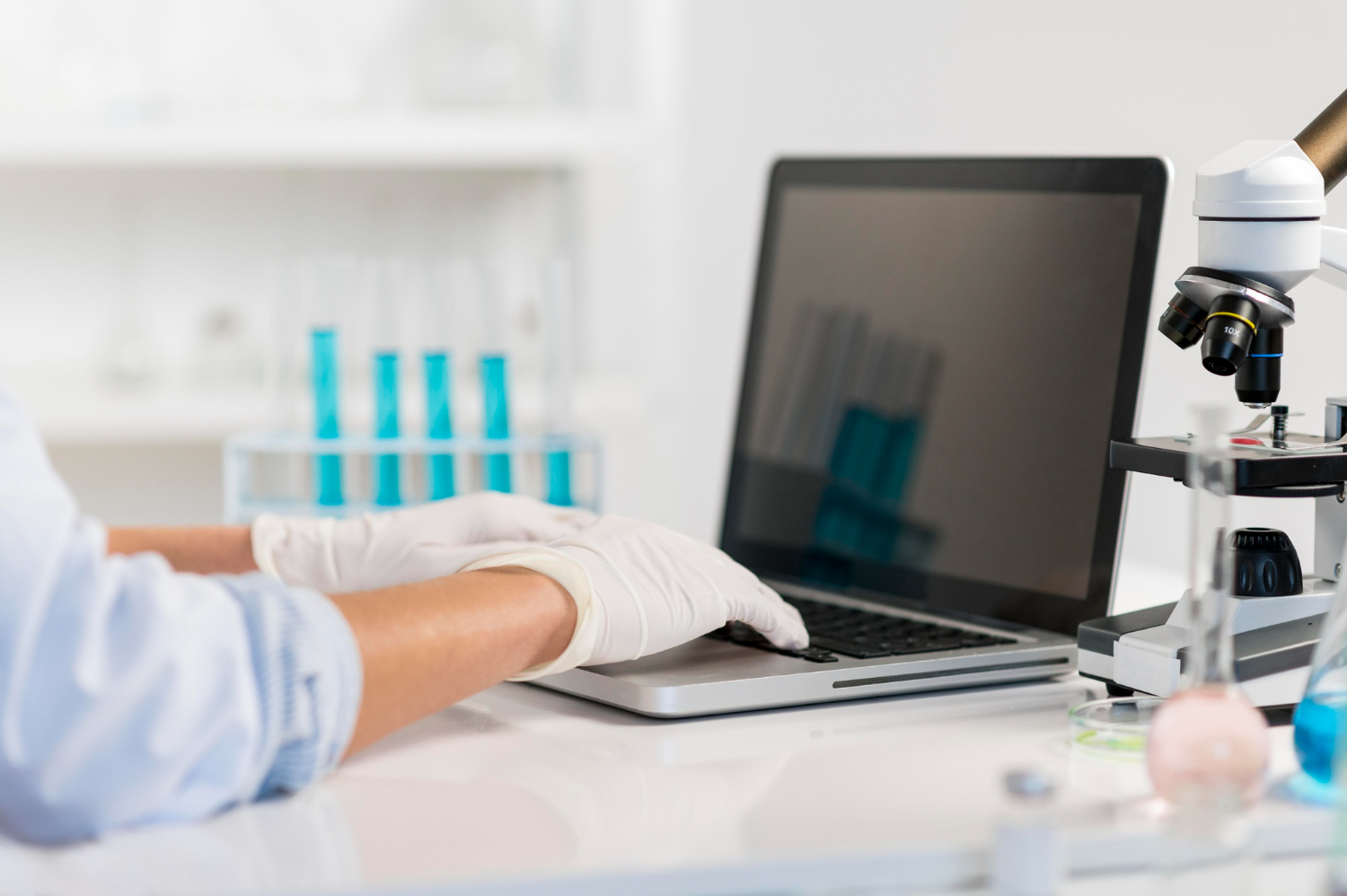
Bengaluru has become one of India’s major centers for food manufacturing, food processing, restaurants, cloud kitchens, food-tech businesses, exporters, retailers, and quality-testing services. As the food industry continues to grow, food testing laboratories are experiencing increasing demand for accurate, reliable, and timely testing.
For food testing laboratories, growth brings both opportunities and operational challenges. More customers mean more samples, more test requests, more data, more reports, and greater responsibility for maintaining accuracy and traceability. Managing all these activities through spreadsheets, paper records, emails, and disconnected systems can become increasingly difficult.
This is where a Laboratory Information Management System (LIMS) can play an important role.
A modern LIMS helps laboratories digitize and organize their core processes, from sample registration and testing to result management, quality control, reporting, and data analysis. By automating repetitive activities and centralizing laboratory information, LIMS can help food testing laboratories increase efficiency while maintaining quality.
For organizations researching LIMS software Bengaluru, it is important to look beyond basic sample tracking and consider how a LIMS can support long-term business growth.
Here are seven ways LIMS can help Bengaluru food testing laboratories scale their operations.
1. Handle Increasing Sample Volumes More Efficiently
One of the first challenges a growing food testing laboratory encounters is the increase in sample volume.
A laboratory may receive samples from food manufacturers, restaurants, exporters, retailers, catering companies, and other organizations. Each sample can involve multiple tests, specific specifications, different analytical methods, and individual reporting requirements.
When sample information is managed manually, laboratory personnel may spend significant time entering data, updating spreadsheets, locating records, and checking the status of individual samples.
LIMS can streamline this process by providing a centralized platform for sample management.
A sample can be registered in the system and assigned a unique identification number. Its information can then be tracked throughout the testing lifecycle. Depending on the LIMS configuration, laboratories can manage sample receipt, test allocation, analysis, result entry, review, approval, and report generation through connected workflows.
This provides laboratory teams with better visibility into every sample.
For example, managers can quickly identify which samples are:
- Newly received
- Waiting for testing
- Currently under analysis
- Awaiting result verification
- Ready for report generation
- Completed and released
This becomes especially valuable when sample volumes increase significantly.
Instead of adding administrative work every time the laboratory gains a new customer, digital workflows can help the existing team manage a larger workload more systematically.
For a growing food testing laboratory, efficient sample management is therefore one of the most important benefits of implementing LIMS.
2. Automate Repetitive Laboratory Processes
Laboratory employees should spend their time on activities that require technical expertise rather than repetitive administrative work.
However, food testing laboratories often have several routine processes that can consume considerable staff time. These may include data entry, assigning tests, calculating results, preparing reports, sending notifications, and maintaining records.
A LIMS can automate or streamline many of these activities.
For example, once a sample is registered, the system can associate it with the requested tests and route the work to the appropriate laboratory personnel. Analysts can access assigned work and enter results directly into the system.
Automated calculations can also reduce the need for repeated manual calculations, depending on the laboratory’s testing requirements and LIMS configuration.
Report generation is another area where automation can create significant efficiency gains. Instead of manually transferring results into report templates, a LIMS can use stored sample and result information to generate standardized reports.
This can help reduce repetitive work and minimize opportunities for transcription errors.
For laboratories evaluating Lab management software Bangalore, workflow automation should be one of the key factors considered during the selection process.
A system that supports automation can help laboratories increase productivity without requiring administrative resources to grow at the same rate as sample volumes.
3. Improve Data Accuracy, Traceability, and Accountability
Food testing results can have a significant impact on product quality, food safety, customer decisions, and regulatory requirements. Consequently, laboratories need reliable systems for managing laboratory data.
Manual processes can create risks such as duplicate entries, incorrect data transcription, misplaced documents, or unauthorized changes.
LIMS provides a centralized environment where laboratory information can be captured and managed systematically.
Each sample can be connected to its associated tests, results, users, and reports. This creates a clear digital trail of laboratory activities.
A complete audit trail is particularly useful for understanding changes made to laboratory records. Depending on the system configuration, organizations can monitor activities such as data modifications and user actions.
Role-based access can further improve accountability by allowing different users to access functions according to their responsibilities.
For example, an analyst may be allowed to enter test results, while an authorized reviewer or manager may be responsible for reviewing and approving them.
This separation of responsibilities can help establish stronger operational controls.
QR code functionality can also make sample identification and tracking more convenient. Instead of manually searching for sample numbers, laboratory staff can scan a QR code associated with a sample and access its relevant information, depending on the system’s implementation.
As laboratories scale, these capabilities become increasingly important because managing data accurately becomes more difficult when the number of samples, employees, customers, and tests increases.
4. Support Quality Management and ISO 17025 Requirements
Quality and compliance are critical considerations for food testing laboratories.
Many laboratories operate within structured quality systems and may work toward or maintain accreditation requirements. ISO/IEC 17025 is particularly relevant to testing laboratories because it establishes requirements concerning competence, impartiality, and consistent laboratory operations.
An appropriately configured LIMS can support laboratory quality processes by providing controlled workflows and centralized documentation.
This is one reason laboratories searching for ISO 17025 LIMS Bangalore solutions should evaluate whether a LIMS can support their quality-management processes rather than simply focusing on sample management.
Depending on the system, LIMS can help laboratories organize areas such as:
- Sample and test records
- Test methods
- Quality control information
- User permissions
- Audit trails
- Result review and approval
- Instrument-related information
- Standardized reporting
- Laboratory documentation
- Corrective and preventive processes
A LIMS does not automatically make a laboratory ISO 17025 compliant or guarantee accreditation. Compliance depends on the laboratory’s overall management system, technical competence, procedures, personnel, equipment, methods, and implementation.
However, a properly implemented LIMS can provide technological support for maintaining controlled and traceable laboratory processes.
For growing food testing laboratories, having structured digital records can also make it easier to manage documentation as operational complexity increases.
5. Reduce Turnaround Time and Improve Customer Satisfaction
Turnaround time is an important performance indicator for food testing laboratories.
Food manufacturers may be waiting for test results before releasing products. Exporters may need reports for customers or shipment requirements. Restaurants and retailers may require laboratory results as part of their quality assurance activities.
When testing processes are slowed down by manual administration, customers may experience unnecessary delays.
LIMS can help improve turnaround time by connecting different stages of the laboratory workflow.
Instead of manually coordinating between sample reception, analysts, reviewers, and reporting teams, users can work within a shared system.
Managers can identify pending samples and monitor workloads. Analysts can see assigned tests. Reviewers can identify results waiting for approval.
Automated notifications can also help ensure that important activities are not overlooked.
This improved visibility can make laboratory operations more predictable.
For example, if a sample has been waiting for a particular test for longer than expected, management can identify the issue and take corrective action. The problem may relate to workload, equipment availability, staffing, or another operational bottleneck.
By reducing unnecessary administrative delays, LIMS can help laboratories deliver results more consistently.
Improved turnaround time can also contribute to better customer relationships, particularly when customers depend on laboratory reports to make time-sensitive business decisions.
6. Provide Management With Better Operational Insights
As a laboratory grows, managers need to understand more than individual sample results. They need visibility into overall laboratory performance.
A modern LIMS can consolidate laboratory data and provide management with useful operational information.
Depending on the system’s capabilities, management may be able to monitor metrics such as:
- Total samples received
- Samples completed
- Pending samples
- Testing turnaround time
- Test volumes
- Analyst workload
- Department performance
- Repeated testing
- Customer-wise sample volumes
- Operational trends
Scheduled MIS reporting can make this information even more useful.
Instead of manually compiling spreadsheets at regular intervals, scheduled management information reports can provide relevant data to authorized stakeholders according to defined schedules.
This can help management identify trends and make better decisions.
For instance, if sample volumes for microbiological testing are increasing consistently, management may decide to invest in additional equipment, staff, or laboratory capacity.
Similarly, if a particular testing workflow is regularly creating delays, managers can investigate the underlying cause.
This data-driven approach becomes increasingly valuable as the laboratory expands.
Rather than managing growth based solely on assumptions, laboratory leaders can use operational information to identify bottlenecks, allocate resources, and plan future investments.
7. Build a Scalable Foundation for Future Growth
The ultimate objective of implementing LIMS is not simply to digitize today’s laboratory operations. A well-selected system should also support tomorrow’s growth.
A Bengaluru food testing laboratory may begin with a relatively small number of users and samples. Over time, it may add new testing services, increase its customer base, introduce additional equipment, expand laboratory departments, or establish additional locations.
A scalable LIMS can help support these changes.
Cloud-based solutions can offer additional flexibility because laboratory data and workflows can be managed through a centralized platform, subject to the system’s architecture, security controls, and user permissions.
This is why laboratories exploring Cloud LIMS Bangalore solutions should assess factors such as scalability, data security, accessibility, user management, backup processes, and integration capabilities.
A cloud-based platform can also reduce the need for laboratories to manage extensive local infrastructure, depending on the deployment model.
Another important consideration is usability.
A technically powerful LIMS is less effective if employees find it difficult to use. A user-friendly interface can help laboratory personnel adopt the system more easily and reduce resistance to digital transformation.
Role-based access is also important as organizations grow. Different users can be given access according to their responsibilities, helping maintain appropriate controls while allowing employees to work efficiently.
In this way, LIMS can become part of the laboratory’s long-term digital infrastructure rather than simply serving as a tool for solving immediate administrative problems.
What Should Bengaluru Food Testing Labs Look for in a LIMS?
Before selecting a LIMS, laboratory management should identify its current challenges and future requirements.
Some important areas to evaluate include:
Sample Management
The system should support the complete sample lifecycle, from registration and receipt through testing, review, and reporting.
Workflow Automation
Look for capabilities that reduce repetitive manual processes and support standardized laboratory workflows.
Role-Based Access
Users should be able to access the functions and information appropriate to their responsibilities.
Audit Trail
A comprehensive audit trail can provide greater visibility and traceability of activities within the system.
QR Code Support
QR code generation and scanning can make sample identification and tracking more convenient.
MIS and Reporting
Management should be able to access useful operational information and generate reports according to organizational requirements.
Cloud Deployment
For laboratories considering cloud-based systems, evaluate security, availability, scalability, backup, and access controls.
Compliance Support
The LIMS should support the laboratory’s quality-management processes and documentation requirements, including relevant NABL and ISO requirements.
FAQs
1. What is LIMS software, and why do food testing labs need it?
LIMS stands for Laboratory Information Management System. It is software designed to manage laboratory data and workflows, including sample registration, testing, results, reporting, and laboratory records. For food testing laboratories, LIMS can help improve efficiency, traceability, data accuracy, and operational visibility as sample volumes increase.
2. Can LIMS help a food testing lab meet ISO 17025 requirements?
A properly configured LIMS can support several processes associated with an ISO/IEC 17025 quality management system, such as controlled workflows, data traceability, user permissions, audit trails, result review, and documentation. However, LIMS alone does not make a laboratory ISO 17025 compliant. The laboratory must implement all applicable management and technical requirements.
3. What are the benefits of a Cloud LIMS for Bengaluru laboratories?
A Cloud LIMS can provide centralized access to laboratory information while reducing the need for certain on-premise infrastructure, depending on the deployment model. It can support scalability, centralized data management, and access for authorized users. Laboratories should evaluate security, backup, availability, user access, and data-management policies before selecting a cloud solution.
4. Can LIMS manage QR codes for food samples?
Yes, LIMS platforms can support QR code-based sample identification when the functionality is available and configured appropriately. QR codes can make it easier for laboratory personnel to identify samples and retrieve associated information, helping reduce manual identification errors.
5. How do I choose the right LIMS for a food testing laboratory?
Start by documenting your laboratory’s current workflows and challenges. Then evaluate LIMS platforms based on sample management, workflow automation, reporting, user permissions, audit trails, QR code capabilities, scalability, cloud deployment, compliance support, integrations, usability, implementation, and ongoing support.
Conclusion
Bengaluru’s expanding food industry is creating new opportunities for food testing laboratories, but growth also increases operational complexity. Laboratories need to process higher sample volumes while maintaining accuracy, traceability, quality, and timely reporting.
A LIMS can help address these challenges by digitizing laboratory workflows, automating repetitive activities, improving data management, supporting quality processes, reducing turnaround time, providing management insights, and creating a scalable foundation for future growth.
For laboratories comparing LIMS software Bengaluru, Laboratory Information Management System Bengaluru, Lab management software Bangalore, Cloud LIMS Bangalore, or ISO 17025 LIMS Bangalore solutions, it is important to select a platform that combines functionality with usability, security, scalability, and compliance support.
One solution worth considering is eLABSS LIMS Software. eLABSS LIMS offers features designed to support modern laboratory operations, including role and permission-based access, cloud-based solutions, a user-friendly interface, QR code generation, scheduled MIS, and a complete audit trail.
From a compliance perspective, eLABSS LIMS supports requirements associated with NABL 133 and ISO certification, along with resources such as a user manual and validation report to support implementation and quality processes.
For a food testing laboratory looking to move away from fragmented manual processes and build a more structured, scalable digital workflow, eLABSS LIMS Software can be considered as a technology partner for the next stage of laboratory growth.
Comments are closed