

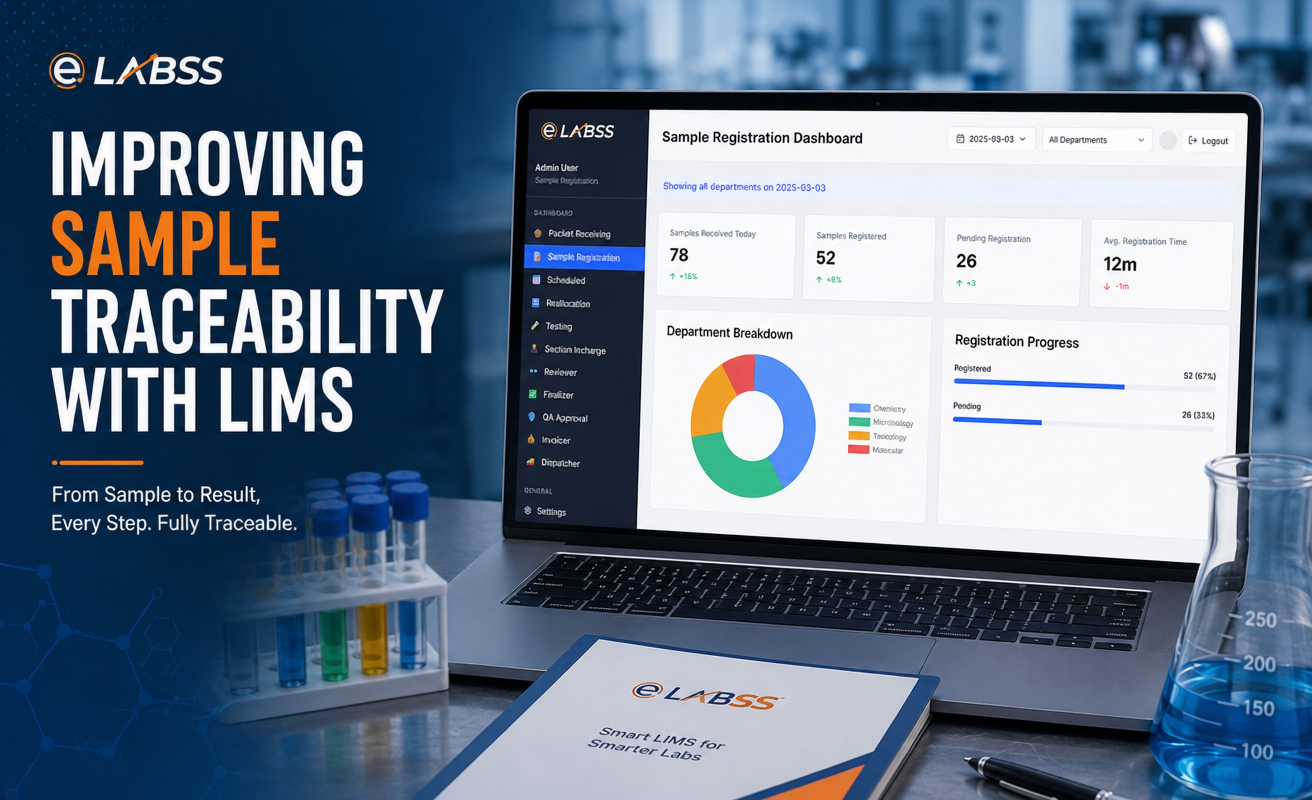
In any laboratory, every sample tells a story. From the moment it is collected until the final report is generated, maintaining complete visibility over its journey is essential. Whether it’s a pharmaceutical, food, environmental, clinical, or research laboratory, poor sample traceability can lead to errors, delayed results, regulatory non-compliance, and compromised data integrity.
This is where a Laboratory Information Management Software (LIMS) becomes invaluable. By automating sample tracking and maintaining a complete digital record of every activity, LIMS significantly improves sample traceability while enhancing laboratory efficiency.
In this blog, we’ll explore why sample traceability matters, the challenges laboratories face, and how Laboratory Information Management Software simplifies the entire sample lifecycle.
What Is Sample Traceability?
Sample traceability refers to the ability to track a sample throughout its entire lifecycle—from collection and registration to testing, storage, reporting, and disposal.
A robust traceability system records every interaction with the sample, including:
- Sample collection details
- Unique sample identification
- Storage location
- Test assignments
- Analyst information
- Instrument usage
- Test results
- Report generation
- Sample disposal records
Complete traceability ensures that every sample can be located, verified, and audited at any stage of the testing process.
Why Is Sample Traceability Important?
Effective sample traceability plays a critical role in maintaining laboratory quality and operational efficiency.
It helps laboratories:
- Prevent sample mix-ups
- Reduce human errors
- Improve result accuracy
- Maintain complete audit trails
- Meet regulatory requirements
- Enhance customer confidence
- Simplify laboratory audits
- Improve turnaround times
Without proper traceability, laboratories risk losing valuable data, delaying projects, and facing compliance issues.
Challenges of Manual Sample Tracking
Many laboratories still rely on paper records, spreadsheets, or disconnected systems to manage samples.
These manual processes often result in:
- Misplaced samples
- Duplicate sample IDs
- Data entry errors
- Lost documentation
- Delayed sample retrieval
- Limited visibility into sample status
- Time-consuming audits
As sample volumes increase, manual tracking becomes increasingly difficult and inefficient.
How Laboratory Information Management Software Improves Sample Traceability
A Laboratory Information Management Software automates sample management by creating a centralised digital system that records every stage of the sample lifecycle.
Instead of relying on manual processes, laboratories gain real-time visibility into every sample’s location and status.
1. Unique Sample Identification
Every sample entered into the system receives a unique identification number or barcode.
This ensures:
- Accurate sample identification
- Elimination of duplicate records
- Faster sample retrieval
- Improved tracking accuracy
Barcode-enabled tracking further reduces manual errors during sample handling.
2. Real-Time Sample Tracking
One of the biggest advantages of Laboratory Information Management Software is real-time sample visibility.
Laboratory staff can instantly view:
- Current sample status
- Assigned analyst
- Testing stage
- Storage location
- Pending activities
- Completion status
This improves workflow transparency and helps laboratories manage workloads more efficiently.
3. Complete Audit Trails
Every action performed on a sample is automatically recorded within the system.
Audit trails typically include:
- Date and time stamps
- User information
- Sample movements
- Test modifications
- Result approvals
- Report generation history
These records support regulatory compliance and simplify internal or external audits.
4. Workflow Automation
Manual sample movement often creates delays and increases the risk of errors.
A Laboratory Information Management Software automates workflows by:
- Assigning tests automatically
- Sending notifications
- Managing approvals
- Tracking deadlines
- Updating sample status in real time
Automation ensures that samples move efficiently through every stage without unnecessary delays.
5. Instrument Integration
Modern LIMS platforms integrate directly with laboratory instruments.
Instead of manually entering results, test data is captured automatically from connected equipment.
This helps:
- Reduce transcription errors
- Improve data accuracy
- Save laboratory time
- Ensure consistent reporting
Regulatory Compliance Through Better Traceability
Laboratories operating under standards such as ISO 17025, NABL, GLP, and GMP must maintain complete documentation for every sample.
A Laboratory Information Management Software supports compliance by providing:
- Secure electronic records
- Controlled user access
- Digital signatures
- Version control
- Complete audit trails
- Data integrity
These capabilities help laboratories remain inspection-ready while reducing administrative effort.
Benefits of Improving Sample Traceability
Implementing Laboratory Information Management Software delivers measurable improvements across laboratory operations.
Key benefits include:
- Faster sample processing
- Improved operational efficiency
- Reduced manual errors
- Better laboratory productivity
- Enhanced data integrity
- Improved regulatory compliance
- Greater customer confidence
- Quicker report generation
- Better resource utilisation
Ultimately, improved traceability leads to higher-quality laboratory services and more reliable test results.
Best Practices for Effective Sample Traceability
To maximise the benefits of a LIMS, laboratories should follow these best practices:
- Assign unique IDs or barcodes to every sample.
- Standardise sample registration procedures.
- Automate workflow approvals wherever possible.
- Integrate laboratory instruments with the LIMS.
- Maintain secure user access and audit trails.
- Train staff on proper sample handling procedures.
- Regularly review traceability records for quality improvement.
These practices help laboratories maintain consistency, accuracy, and compliance throughout the testing process.
Conclusion
As laboratories continue to process increasing sample volumes while meeting stricter regulatory requirements, effective sample traceability has become more important than ever. Manual tracking methods are no longer sufficient to ensure accuracy, efficiency, and compliance.
eLabss LIMS provides an end-to-end solution for improving sample traceability through automated sample tracking, barcode management, workflow automation, instrument integration, and comprehensive audit trails. By digitising the entire sample lifecycle, eLabss LIMS helps laboratories reduce errors, improve turnaround times, strengthen compliance, and deliver reliable results with confidence.
Frequently Asked Questions (FAQs)
1. What is sample traceability in a laboratory?
Sample traceability is the ability to monitor and document a sample’s journey from collection and registration to testing, reporting, storage, and disposal.
2. Why is sample traceability important?
It helps prevent sample mix-ups, improves result accuracy, supports regulatory compliance, and provides complete visibility into laboratory workflows.
3. How does Laboratory Information Management Software improve sample traceability?
LIMS automates sample tracking using unique IDs, barcode technology, audit trails, workflow automation, and real-time status updates throughout the sample lifecycle.
4. Can LIMS help laboratories meet regulatory requirements?
Yes. LIMS supports compliance with standards such as ISO 17025, NABL, GLP, and GMP by maintaining secure records, audit trails, and complete sample documentation.
5. What are the benefits of barcode-based sample tracking?
Barcode tracking reduces manual errors, speeds up sample identification, improves accuracy, and enables quick retrieval of sample information.
6. Why should laboratories choose eLabss LIMS?
eLabss LIMS streamlines sample management with automated tracking, workflow optimisation, instrument integration, and robust compliance features, helping laboratories improve efficiency and maintain complete traceability.
Comments are closed