

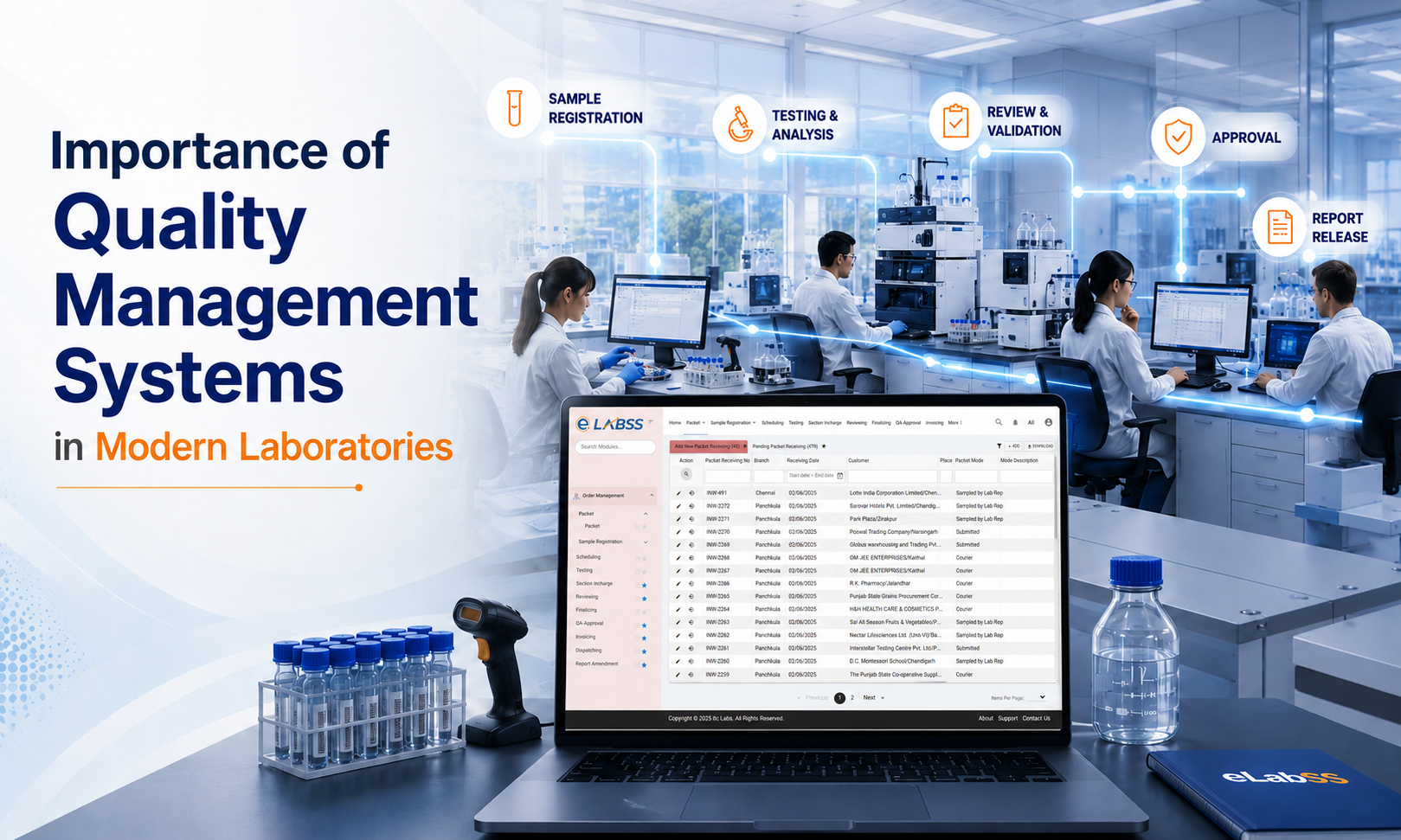
Modern laboratories operate under immense pressure. Regulatory bodies are stricter than ever. Data integrity expectations have skyrocketed. A single compliance failure can result in warning letters, product recalls, or worse, harm to patients and end users. In this environment, relying on paper-based processes or disconnected spreadsheets is no longer sustainable. What laboratories need is a robust, end-to-end Quality Management System (QMS), one that brings every critical quality process under a single, auditable roof.
What Is a Laboratory Quality Management System?
A laboratory QMS is a structured framework of policies, procedures, and processes designed to ensure that every activity in the lab meets defined quality standards and regulatory requirements. Whether you’re operating in pharmaceuticals, biotech, clinical diagnostics, or contract research, a well-implemented QMS doesn’t just help you pass audits. It transforms the way your laboratory functions.
But not all QMS platforms are created equal. The real value lies in the depth and integration of the modules they offer. Let’s break down why each component matters.
Core Features That Make a QMS Truly Powerful
CAPA- Corrective and Preventive Action
At the heart of any quality system is the ability to identify problems and fix them permanently. CAPA management allows laboratories to investigate the root cause of non-conformances, implement corrective actions, and critically put preventive measures in place so the same issue doesn’t resurface. Without a structured CAPA process, labs often find themselves fighting the same fires repeatedly.
Change Control
Change is inevitable. New equipment arrives. Processes get updated. Reagent suppliers change. Every one of these modifications carries risk if not managed carefully. A change control module ensures that all changes go through a formal review and approval workflow before implementation, protecting the lab from unintended consequences.
Deviation Management
Not everything goes according to plan. When a process step deviates from the approved procedure, that event must be captured, investigated, and closed with full documentation. Deviation management gives labs a disciplined way to handle these events without letting them slip through the cracks or pile up unresolved.
OOS/OOT- Out of Specification and Out of Trend
Unexpected analytical results are red flags. Out-of-specification (OOS) and out-of-trend (OOT) investigations are regulatory requirements in most regulated industries, and for good reason. A proper QMS module guides lab personnel through a structured investigation process, ensuring that every anomalous result is evaluated with scientific rigor and properly documented.
Vendor Qualification
Your results are only as good as your inputs. Reagents, consumables, reference standards, they all come from somewhere. A vendor qualification module helps labs systematically evaluate, approve, and monitor suppliers to ensure that incoming materials meet quality standards every single time.
Audit Management
Audits whether internal or from regulatory agencies can be stressful without the right tools. A QMS with built-in audit management helps teams plan audits, track findings, assign corrective actions, and maintain an audit trail that demonstrates continuous quality improvement. It turns what used to be a scramble into a manageable, repeatable process.
Market Complaints
For labs connected to commercial products, market complaints are a critical feedback loop. Capturing, investigating, and closing complaints in a structured manner isn’t just good practice, in many jurisdictions, it’s a legal requirement. A QMS ensures no complaint falls through the cracks and that trending data is available to identify systemic issues early.
GLP- Good Laboratory Practices
GLP compliance ensures that laboratory studies are conducted and reported with integrity, traceability, and consistency. A QMS with GLP support embeds these principles directly into day-to-day workflows, making compliance the path of least resistance rather than an afterthought.
Calibration Management
An out-of-calibration instrument can compromise months of data. Calibration management tracks equipment schedules, sends automated reminders, records results, and flags overdue instruments- so labs never unknowingly run tests on equipment that hasn’t been verified.
Internal and External Training
Personnel are your most important quality tool. A QMS with training management ensures that every analyst is trained on the procedures relevant to their role, tracks completion and competency assessments, and maintains records that are ready for inspection at any moment. This covers both internal training sessions and external certifications or workshops.
Management Review Meetings
Quality isn’t just a lab-floor concern, it requires leadership engagement. Management review meeting modules help organizations schedule, document, and follow up on these critical sessions where quality metrics, trends, audit outcomes, and strategic decisions are reviewed and recorded.
Good Documentation Practices (GDP)
Every record in a regulated lab tells a story. Good documentation practices ensure that story is accurate, legible, contemporaneous, and attributable. A QMS reinforces GDP through controlled document workflows, version management, and electronic signatures, eliminating the risks that come with paper-based documentation.
The Cost of Not Having a QMS
Some laboratories still resist implementing a formal QMS, viewing it as overhead. The reality is the opposite. Without one, you’re spending far more in rework, failed audits, delayed results, and the constant anxiety of regulatory exposure. A single 483 observation from an FDA inspection or a critical finding from an accreditation body can cost far more than years of QMS subscription fees.
More importantly, quality failures in laboratory settings don’t just have financial consequences. They have human ones.
Conclusion
A robust laboratory Quality Management System isn’t a luxury, it’s a necessity for any lab that takes quality, compliance, and data integrity seriously. From CAPA and calibration management to audits and documentation control, every module plays a critical role in building a culture of quality that regulators trust and customers value.
The question isn’t whether your laboratory needs a QMS. The question is whether yours is robust enough.
With QMS seamlessly integrated into eLabss LIMS, laboratories can manage quality, compliance, and operational workflows from a single platform, improving efficiency, ensuring audit readiness, and supporting continuous quality improvement.
Frequently Asked Questions (FAQs)
1. What is a Laboratory Quality Management System (QMS)?
A Laboratory Quality Management System (QMS) is a structured framework that helps laboratories manage quality, compliance, documentation, audits, and operational processes while meeting regulatory requirements.
2. Why is a Quality Management System important for laboratories?
A robust QMS improves data integrity, regulatory compliance, operational efficiency, and quality control while reducing risks associated with audits, deviations, and non-conformances.
3. What are the key features of a laboratory QMS?
Key QMS features include CAPA management, change control, deviation management, OOS/OOT investigations, audit management, calibration tracking, training management, and document control.
4. How does a QMS help with regulatory compliance?
A QMS maintains complete audit trails, standardized workflows, electronic records, and controlled documentation, helping laboratories comply with FDA, GLP, ISO, and other regulatory requirements.
5. What is CAPA in a laboratory Quality Management System?
CAPA (Corrective and Preventive Action) helps laboratories identify root causes of quality issues, implement corrective actions, and prevent recurring non-conformances.
6. How does calibration management improve laboratory quality?
Calibration management ensures instruments are maintained and calibrated on schedule, preventing inaccurate results, equipment failures, and compliance risks.
7. Can a laboratory QMS improve audit readiness?
Yes. A QMS centralizes records, tracks audit findings, manages corrective actions, and provides complete documentation, making internal and external audits more efficient.
8. What are the risks of operating a laboratory without a QMS?
Without a QMS, laboratories face increased risks of compliance failures, data integrity issues, audit observations, rework, operational inefficiencies, and potential damage to reputation.
Comments are closed